Materials Relevant to Practical Functional Assessment and Skill-Based Treatment (PFA-SBT) for Severe Problem Behavior
*Videos used with informed consent
Success Stories
The Nebraska Autism Spectrum Disorder (ASD) Network supports local school districts, Educational Service Units (ESUs), and parents and caregivers of children (birth to 21 years) with autism or related characteristics. Housed at the University of Nebraska–Lincoln and funded by the Nebraska Department of Education, the ASD Network works to build district capacity to provide high-quality, individualized programming for students with autism.
In this 15-minute presentation, Annette Wragge, State Coordinator for the Nebraska ASD Network, shares the outcomes their team has achieved with students exhibiting severe behavior who have received Practical Functional Assessment and Skill-Based Treatment (PFA-SBT) supports in Nebraska public schools.
Theresa Zano-McMillan, a parent from Virginia Beach, shared her family’s journey implementing Practical Functional Assessment (PFA) and Skill-Based Treatment (SBT) to meaningfully improve the quality of life of her daughter, Izzy. Under the guidance of FTF Behavioral Consulting, Theresa and her family adopted PFA/SBT, Universal Protocols, as well as the Food Happens Protocol—to better understand Izzy’s needs and support her growth.
The transformation was significant. As Izzy gained new skills, experienced fewer barriers, and accessed richer, more flexible reinforcement, her world expanded in profound ways. Inspired by Izzy’s progress and growing independence, Theresa opened HRE Bakery in Virginia Beach, where Izzy now works and contributes as a valued member of the team.
Below is Dr. Adithyan Rajaraman’s interview with Theresa Zano-McMillan, highlighting their family’s experience and the life-changing impact of PFA and SBT.
Watch the full interview here.
Shamah Autism Center provides comprehensive educational and therapeutic services for individuals with autism and developmental delays in Saudi Arabia. Their interdisciplinary team integrates evidence-based approaches to enhance communication, independence, and social engagement across home, school, and community settings.
Shaher Al Matrafi and Shahad Bin Nafesah implemented the following case, which demonstrates the successful use of Practical Functional Assessment (PFA) and Skill-Based Treatment (SBT) to promote meaningful and contextually appropriate behavior change.
Below is their presentation of Shaher’s case in both English and Arabic.
The case presentation presented in Arabic:
Amal Youth and Family Centre, founded in 2021 in St. John’s, Newfoundland and Labrador, provides inclusive, trauma-informed services for children, youth, families, and adults from diverse cultural, linguistic, and developmental backgrounds. Rooted in the meaning of “Amal” — hope — the centre delivers a wide range of supports including family engagement, behavioral health services, out-of-home and family-based care, adult services, and clinical counseling through the Amal Wellness Centre. Amal also promotes newcomer integration and workforce participation through its Unite & Empower program. Guided by values of respect, diversity, and holistic well-being, Amal strives to create a safe and supportive environment where individuals and families can thrive. Below is a presentation by Sara McCarthy.
VIVA Therapeutic Services, established by Danielle Pelletier in 2005, delivers high-quality, evidence-based interventions for autistic preschool-aged children in New Brunswick. With over 500 families served, VIVA integrates behavioral and developmental approaches tailored to each child’s unique needs. The organization values teamwork, integrity, and joy, focusing on naturalistic teaching methods that respect each child’s neurodiversity. VIVA is committed to continuous growth and celebrates every milestone achieved by its learners and staff, fostering a supportive and inclusive community. Below are two case studies presented by Janet Mitton and Sara Moosa.
Columbia Regional Inclusive Services (CRIS) offers a comprehensive range of educational support for students with low-incidence disabilities. These services include consultation for parents, early intervention programs, support for school age teams, itinerant teaching, physical therapy, assistive technology, augmentative communication, and specialized classrooms for students who are deaf or hard of hearing. CRIS aims to provide tailored assistance to help local school districts effectively educate students with special needs while ensuring inclusivity and accessibility. Below is a presentation on compassionate teaching in the public school settings presented by Hillary Flood.
ABA Guatemala is one of the first clinics in Guatemala specializing in early intervention using the Applied Behavior Analysis (ABA) method for children with autism and other disorders. Ana Maria Mendez Vides shares a case summary in English and Spanish.
In her Cultural Responsiveness Training, Ana Maria demonstrates how the principles of Practical Functional Assessment (PFA) and Skill-Based Treatment (SBT) can be thoughtfully adapted to honor local values, language, and family practices. Her presentation exemplifies how culturally grounded applications of PFA-SBT can promote inclusion and meaningful outcomes across global settings.
The START Project, based at Grand Valley State University’s Autism Education Center in Michigan and funded by the Michigan Department of Education (MDE, OSE), offers evidence-based training, coaching, and resources to school teams in Michigan supporting students with Autism Spectrum Disorder (ASD). This statewide initiative aims to enhance educational programs and the quality of life for students with ASD through systems-level improvements. Below are two success stories from the START Project.
Share Your Clinical Success Stories With Us!
We believe that sharing experiences can inspire and empower others. If you’ve experienced success in your clinical journey, we invite you to share your story with us. Whether you’re a professional or a caregiver, your story could make a meaningful impact on someone else’s journey. Your insights, challenges, and triumphs can be a beacon of hope for others who are on a similar path.
Please take a moment to fill out this form with your story. Your contribution can help us build a community of support and encouragement. Together, we can make a difference!
Video Examples of PFA-SBT in Action
Founded more than 70 years ago by community members seeking services for loved ones with Cerebral Palsy, Upstate Caring Partners (UCP), formerly known as Upstate Cerebral Palsy, has since grown and diversified to serve individuals of all abilities. With approximately 1800 staff members across 74 locations spanning 4 counties, they have become a central figure in Central New York’s provision of services for intellectual and developmental disabilities, as well as behavioral health needs. The organization maintains its legacy of innovation through evidence-based programs while remaining dedicated to addressing emerging community needs. Here is a series of video examples showcasing PFA-SBT implementation by UCP’s staff.
The Ontario School Board is an educational organization overseeing and managing public schools in Ontario, Canada. They play a crucial role in providing quality education, curriculum development, and ensuring the well-being of students across the region. Below is a school board presentation from Canadian BCBAs on the effects of the PFA-SBT process in their school district.
Tutorials Relevant to the PFA-SBT Process
The National Autism Conference offers thorough, evidence-based insights to support educators, professionals, and families create effective educational programs for students with autism spectrum disorders. Explore Dr. Hanley’s presentation at the 2018 National Autism Conference: ‘Toward Meaningful Outcomes from Dignified Processes: A Tutorial on the Practical Functional Assessment and Skill-Based Treatment Process for Problem Behavior,’ presented in two parts.
In 2006, CEO Dr. Aaron Blocher-Rubin and a group of local families founded Arizona Autism United due to a shortage of quality care. They established a nonprofit with a singular focus: delivering top-notch direct services and support to children and families in need. Arizona Autism United’s mission is to assist numerous families with personalized support, aiming to become a model of excellence among autism organizations. They offer comprehensive services spanning a lifetime, with facilities statewide. In 2014, Dr. Hanley delivered a brief presentation for parents on Functional Assessment during Arizona Autism United’s Annual Conference. Watch the video below for further insights.
Data Finch Technologies specializes in data collection and analysis solutions for applied behavior analysis (ABA) professionals and related fields. Their innovative software streamlines data collection, client information management, and data-driven decision-making. They empower professionals to provide personalized, efficient services, saving time, improving accuracy, and enhancing client outcomes in behavioral and therapeutic services. In 2014, Dr. Hanley delivered a presentation on the functional assessment and treatment of severe problem behavior.
For the most up-to-date training on PFA-SBT, please go to www.ftfbc.com or press the button below.
The PFA & SBT Community, a 20,000-member Facebook group, offers resources and support for those using or learning about PFA and SBT to enhance their practice and teach skills. In the left video, Hillary Laney and Ed Sidley delve into the values and evidence behind the PFA/SBT process, featuring insights from parents.
Brett DiNovi & Associates LLC and its subsidiaries provide behavioral consultation and leadership training to over 300 school districts and organizations across multiple states. In the right video, Erin Bertoli, a Board Certified Behavior Analyst at Brett DiNovi & Associates, discusses the IISCA (Interview Informed Synthesized Contingency Analysis), a critical PFA process. This video serves as an introduction to the IISCA.
Podcasts and Interviews relating to PFA-SBT
The Behavioral Observations Podcast, hosted by Matt Cicoria, is a valuable resource in ABA. This podcast features insightful discussions, interviews, and real-world examples, offering practical insights into behavior science and its applications. It’s a must-listen for behavior analysts, educators, therapists, and anyone interested in behavior analysis in various settings. Here are 6 podcast interviews with Matt Cicoria and Dr. Hanley, covering various topics related to PFA-SBT.
In 2021, Session 160 was recorded: What is Today’s ABA? A Conversation with Greg Hanley: CEU/No CEU (Free) presented by Dr. Hanley. This episode started by discussing Dr. Hanley’s recent essay, ‘A Perspective on Today’s ABA.’ They explored his inspiration, his view of ‘today’s ABA,’ reconciling differing messages on functional assessment, the alignment of PFA/SBT with Trauma-Informed Care, and more. The session also featured an extensive audience Q&A.
In 2023, Session 219 was recorded: Catching Up with Dr. Hanley: CEU/No CEU (Free). Dr. Hanley delves deep into PFA-SBT, discussing recent developments and insights in functional assessment and treatment. He delves into the nuances of intervention effectiveness, examining who benefits from intervention. Additionally, he tackles the intricacies of SBT and the essential training required beyond the basics of ‘My Way’ teaching.
In 2024, Session 283 was recorded: Deconstructing Compassionate ABA. Dr. Greg Hanley joins the podcast once again for an in-depth discussion covering a wide range of topics. Dr. Hanley shares insights on his professional association with Action Behavior Centers and the evolution of FTF Behavioral Consulting. He explores key concepts such as Compassionate ABA, the role of extinction in Skills-Based Treatment, and the balance between the immediate and long-term effects of reinforcement. The conversation delves into historical perspectives on Functional Analysis, debates on descriptive functional assessment, and new considerations in addressing head-directed self-injury and tics. Dr. Hanley also discusses the intersection of Skills-Based Treatment with constructional approaches, offering a nuanced perspective on modern behavioral interventions. This session is packed with valuable insights for those passionate about advancing compassionate and effective practices in ABA.
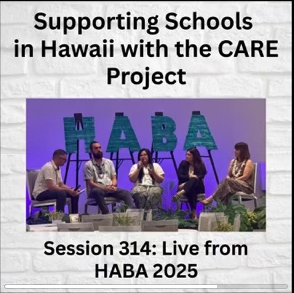
In 2025, Session 314 was recorded: Live from HABA 2025 – The Impact of the Hawaii DOE and The CARE Project. Matt Cicoria joined a panel of employees from Hawaii’s Department of Education for a conversation about the state’s innovative efforts to bring compassionate behavioral supports to students across public schools. This discussion highlights the DOE’s large-scale initiative known as The CARE Project, a collaborative endeavor with FTF Behavioral Consulting and Emergent Learning designed to integrate PFA-SBT and PEAK Relational Training System and AIM Curriculum.
Panelists Alysha Kim, Dodi Pritchett, Joshua Hoppe, and Sherene Hajiro share insights into how the DOE has shifted from a reactive model of addressing problem behavior to a preventive, skills-based approach. They discuss the specific problems The CARE Project was created to solve, the mindset shift toward teaching contextually appropriate behavior, and real case examples demonstrating student and staff success. The conversation also explores how the DOE collects data for research purposes, the challenges of scaling these interventions amid staff turnover, and how educators have come to use “PFA/SBT” as a verb to describe their practice.
This session offers a remarkable look into how statewide implementation of compassionate behavioral support can change systems and outcomes for students.
The Daily BA, hosted by Ryan O and launched in January 2019, brings private conversations about human behavior into the public domain. The Daily BA is committed to honoring the legacy of their field, educating students, and serving the public. Through Op-Ed style discussions, they delve into challenging topics. Watch the two podcast episodes below.
The ABA Ultimate Showdown is a podcast dedicated to fostering constructive, respectful, and professional conversations to further the field of behavior analysis. In 2023, round 14 of ABA Ultimate Showdown tackles the topic of whether a functional assessment primarily serves to inform treatment decisions. The debaters, Dr. Jeffery Tiger and Dr. Mahshid Ghaemmaghami, spoke about different perspectives on assessing and treating problem behavior and the role of behavior analysis.
In 2013, Dr. Hanley, on the left, discusses the seminal article on synthesized analyses and treatments for children with autism who display problem behavior: Producing meaningful improvements in problem behavior of children with autism via synthesized analyses and treatments.
On the right, in 2015, Dr. Jessel and Dr. Saini discuss the Interview Informed Synthesized Contingency Analysis.
ABA Inside Track is a podcast on ABA and behavior science. Hosted by experienced behavior analysts, it offers insights, research reviews, and practical discussions, making ABA concepts accessible to a broader audience. Whether you’re a professional or simply curious about behavior science, this podcast provides valuable knowledge and updates. Below are two episodes.
On the left, in episode 66, recorded in 2018, Dr. Josh Jessel describes the efficiency of the IISCA.
In episode 110, recorded in 2020, on the right, Dr. Adithyan Rajaraman discusses the Interview-Informed Synthesized Contingency Analysis (IISCA).
Tutorials Relevant to the Assessment and Treatment of Stereotypy
The University of Auckland, New Zealand’s most prominent and leading institution, offers a diverse range of undergraduate, postgraduate, and doctoral programs across various disciplines. With a rich history from 1883, it is renowned for academic excellence, research, and a commitment to preparing graduates for global challenges. The university’s vibrant campus, esteemed faculty, and world-class facilities create an inspiring environment for learning and innovation. On the right, Dr. Greg Hanley conducted training on the assessment and treatment of stereotypy during the 2016 ABA Awareness Week at The University of Auckland in New Zealand. The session included a guest introduction by Dr. Javier Virues-Ortega.
ABA España is a prominent organization focused on advancing ABA within the Spanish-speaking community. Education, training, and resources promote ABA principles for individuals with behavioral challenges, families, and professionals. Emphasizing evidence-based practices, ABA España contributes to improved outcomes and enhanced quality of life. In July 2017, at the European ABA Summer School conference held in Cadiz, Spain from July 5th to 8th, Dr. Hanley presented a tutorial on the assessment and treatment of stereotypy.
For the most up-to-date training on assessing and treating stereotypy, please go to www.ftfbc.com or press the button below.
Tutorials Relevant to the Assessment and Treatment of Food Selectivity
Tradewinds Education Center, a part of Upstate Caring Partners, is dedicated to delivering top-quality education to children aged 5 to 21 diagnosed with severe behavioral and developmental disabilities. It operates as a New York State Education Department-approved private school, ensuring educational excellence.
The video on the left showcases the importance of prioritizing choice and assent in assessing and treating food selectivity (Gover et al., 2023) for a nonverbal adolescent with severe autism. Like PFA-SBT for severe problem behavior, it’s safe, client-led, and non-aversive. The process emphasizes clear EOs and synthesized reinforcement conditions and places control with the student. The student showed remarkable progress in a short time.
The video on the right showcases Tradewinds Sr. BCBA Tabitha Collins and her student, who demonstrates the food selectivity treatment model for an adolescent with autism. This treatment aims to expand his diet to healthier foods like strawberries, chicken, and more. Like PFA-SBT for severe problem behavior, it’s safe, client-led, and emphasizes choice and shaping without escape extinction.
For the most up-to-date training on assessing and treating food selectivity and refusal, please go to www.ftfbc.com or press the button below.
Tutorials Relevant to the Assessment and Treatment of Sleep Problems
In this 2014 workshop, presented at the Data Finch Technologies event, Dr. Hanley delves into prevalent sleep issues, particularly in children with autism. He explores how these problems affect behavior and learning, offering strategies for improvement. Learn to work as a team to enhance children’s sleep and design tailored treatments while preventing future issues.
For the most up-to-date training on assessing and treating sleep problems, please go to www.ftfbc.com or press the button below.
Tutorials Relevant to the Prevention of Problem Behavior (Preschool Life Skills)
In this 2014 workshop, part of the Data Finch Technologies event, Dr. Hanley discusses the significance of preventing problem behavior in young children. He presents a class-wide and small-group curriculum aimed at teaching skills to deter the development of such behavior.
For the most up-to-date training on the prevention of problem behavior, please go to www.ftfbc.com or press the button below.
Tutorials Relevant to Universal Protocols
In the following video, Dr. Kelsey Ruppel, a Board Certified Behavior Analyst and special education teacher from FTF Behavioral Consulting, shares valuable insights on supporting your child and managing problem behavior during the COVID-19 crisis. However, the strategies discussed are relevant to other situations in which caregivers might also need to avoid problem behavior.
Other
A shoutout to the ABA social media pioneers.
 Practical Functional Assessment